
KAMBIA DISTRICT, Sierra Leone — In the farming communities of Matham, Koya 2 and Kassasie, climate change is not an abstract future threat. Erratic rainfall, declining soil fertility and deforestation are already affecting agricultural production and putting pressure on rural livelihoods.
But communities are also demonstrating that locally led solutions can help farmers adapt.
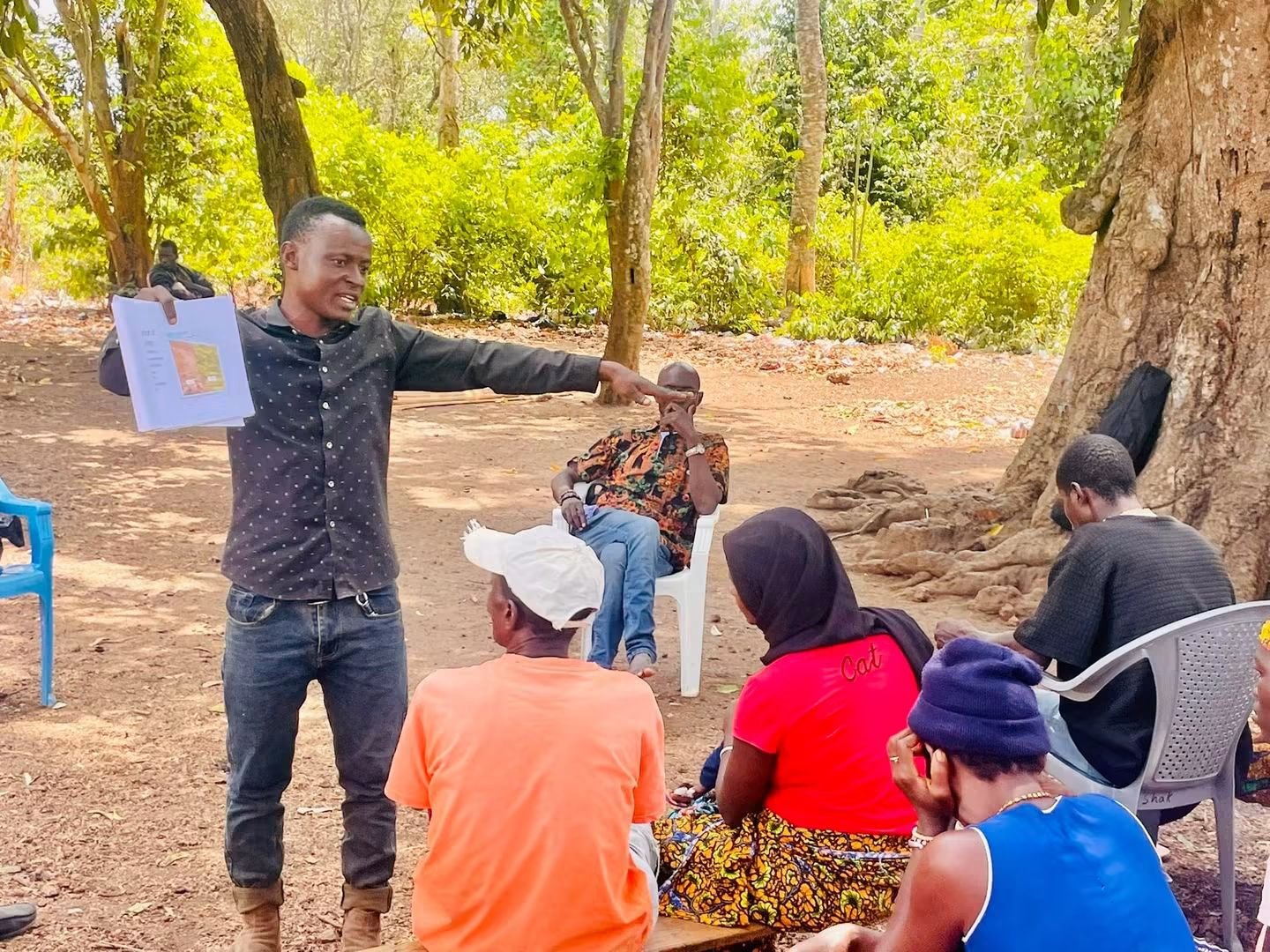
From April 15–17, 2026, the Youth Partnership for Peace and Development (YPPD), in collaboration with Sierra Leone's Ministry of Agriculture and with support from Trócaire, facilitated a three-day refresher training on agroecology and forest management for farmers, women, youth leaders and other community stakeholders in Kambia District.
The training was implemented as part of the Women and Youth Leading Climate Justice Project, which seeks to strengthen local capacity to respond to the impacts of climate change while ensuring that women and young people play meaningful roles in shaping solutions.
Building Resilience From the Ground Up
For farming communities in Kambia District, changing climate conditions are making an already demanding livelihood increasingly difficult. Unpredictable rainfall can disrupt planting seasons. Declining soil fertility affects productivity, while continued deforestation weakens ecosystems on which communities depend.
The refresher training built on engagements conducted in 2025, allowing participants to revisit what they had learned, share their experiences applying different approaches and strengthen practical skills that can be used with locally available resources.
Rather than relying solely on classroom instruction, the training combined community knowledge with technical guidance and hands-on learning.
Participants explored composting, mulching, crop diversification, organic pest control and improved farm planning as practical approaches for restoring soil health and making farming systems more resilient. They then put those lessons into practice.
During field demonstrations, participants prepared compost, designed farm layouts and practiced soil conservation techniques. These practical sessions helped turn technical concepts into approaches that farmers could understand, adapt and replicate on their own farms.
Women and Youth at the Center of Climate Action
Women and young people were active contributors throughout the training—sharing experiences, asking questions and helping identify solutions relevant to their communities.
Their participation reflects an important principle of the Women and Youth Leading Climate Justice Project: people who experience the effects of climate change should have a meaningful role in designing and implementing responses.
For YPPD, strengthening climate resilience therefore involves more than introducing new agricultural techniques. It also means strengthening the knowledge, confidence and leadership of local actors who can continue promoting climate action after a project activity has ended.
The participatory approach created space for farmers and community representatives to discuss what was working, identify persistent challenges and connect their local knowledge with technical expertise from agricultural practitioners.
Restoring Forests While Supporting Livelihoods
The training also addressed the relationship between agriculture and forest conservation.
Participants reflected on the visible effects of deforestation in their communities and explored practical approaches to managing natural resources more sustainably.
Sessions on agroforestry, tree planting and tree nursery establishment generated particular interest because these practices offer opportunities to connect environmental restoration with agricultural livelihoods.
Agroforestry—the integration of trees into farming systems—can provide communities with a practical way to think about food production and environmental conservation together rather than treating them as competing priorities. Participants practiced tree planting and discussed how community-led forest management could contribute to restoring degraded landscapes.
Connecting Climate Resilience With Economic Opportunity
For rural households, environmental sustainability must also make economic sense.
The training therefore encouraged participants to consider how agroecological practices could support livelihoods alongside conservation.
Discussions explored opportunities for value addition and small-scale agribusiness, helping participants think beyond production toward how sustainable agriculture might contribute to household income and local economic opportunity.
This connection is especially important for women and young people, who can face additional barriers to accessing productive resources and economic opportunities.
Building climate resilience that lasts requires approaches capable of protecting natural resources while strengthening people's ability to earn a sustainable livelihood.
Local Commitments Signal Community Ownership
One of the strongest indications of progress came not from the training curriculum, but from commitments made by local stakeholders.
In Kassasie, a community headman publicly committed to providing a plot of land for a community farming site, creating an opportunity for participants to continue practicing and demonstrating sustainable agricultural techniques.
A Ministry of Agriculture Extension Officer also committed to providing continued monitoring and technical support. These commitments matter because sustainable development depends on what happens after a training ends. Community ownership, access to land and continued technical assistance can help participants move from acquiring knowledge to putting that knowledge into sustained practice.
They also demonstrate the value of bringing communities, local leadership, government technical services and civil society together around shared climate priorities.
From Training to Long-Term Resilience
By the end of the three-day training, participants had strengthened their understanding of agroecology and forest management and gained practical experience they could take back to their farms and communities.
But participants also identified barriers that could limit their ability to scale what they had learned.
Limited access to agricultural inputs, financial constraints and weak market linkages remain significant challenges. Continued technical assistance and stronger partnerships will therefore be important for maintaining momentum and helping communities translate new skills into sustainable livelihood improvements.
These challenges offer important lessons for future climate-resilience programming.
Knowledge and training are essential, but farmers also need an enabling environment—including technical services, access to productive resources, financing and markets—to adopt and sustain climate-smart practices over time.
Investing in Locally Led Climate Solutions
The experience in Matham, Koya 2 and Kassasie demonstrates the potential of development approaches that combine local knowledge, practical training, government expertise, inclusive participation and community ownership.
It also reinforces why women and young people should not simply be viewed as beneficiaries of climate programming. They can be leaders, practitioners and partners in developing solutions appropriate to their communities.
For YPPD, this work is part of a broader commitment to ensuring that communities have the knowledge and capacity to respond to environmental challenges while creating pathways toward more resilient livelihoods. The next step is to build on that foundation.
Continued collaboration among communities, government institutions, civil society, donors and development partners can help expand access to agroecological practices, strengthen market opportunities, support community forest management and enable locally led solutions to reach more climate-vulnerable communities.
In Kambia District, the seeds of that transformation are already being planted—both literally and figuratively.
When women, young people and communities have the knowledge, tools and partnerships they need, they can become leaders in building a more climate-resilient Sierra Leone.
The agroecology and forest management refresher training was facilitated by the Youth Partnership for Peace and Development (YPPD), in collaboration with the Ministry of Agriculture and with support from Trócaire, under the Women and Youth Leading Climate Justice Project.